
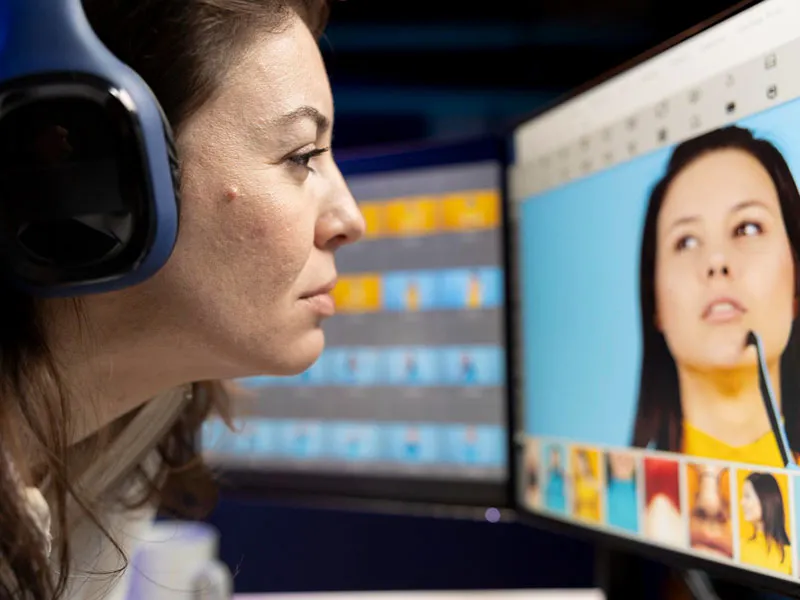
The way people communicate is evolving at a rapid pace, and video interpreting services have become one of the most transformative solutions for making communication accessible to everyone. For Deaf and hard-of-hearing individuals, the ability to connect with interpreters through a screen in real time is not just a convenience but a fundamental shift in how they navigate the world.
What video interpreting services are and how they work
At its most basic level, video interpreting connects a Deaf or hard-of-hearing person with a qualified sign language interpreter through a live video feed. Unlike traditional in-person interpreting, which requires scheduling and physical presence, this approach allows communication to happen on demand from virtually any location.
The interpreter appears on screen and facilitates real-time conversation between the Deaf individual and a hearing party — whether that interaction is taking place in a clinic, a courtroom, a classroom, or a remote work meeting. The flexibility this offers is one of the key reasons demand has grown so significantly in recent years.
Why accessibility in communication cannot wait
For far too long, Deaf and hard-of-hearing individuals have faced significant barriers when trying to access the same information and services that hearing people take for granted. A scoping review published in the Journal of Medical Internet Research found that video remote interpretation holds strong potential for helping Deaf users overcome communication barriers with health personnel, particularly where on-site interpreters are not readily available. From legal consultations to government services to customer support, video interpreting addresses this gap by making skilled interpreters available almost instantly.
How businesses and organizations are responding
Organizations across sectors are recognizing that investing in accessible communication is both a legal responsibility and a business advantage. Under the Americans with Disabilities Act, employers must provide reasonable accommodations for Deaf and hard-of-hearing employees, and video relay systems have become one of the most practical ways to meet that requirement. The shift to remote and hybrid work has made this even more pressing — video interpreting fits naturally into a landscape of virtual meetings and digital collaboration.
The role of technology
Improvements in internet infrastructure, video quality, and platform reliability have made remote interpreting faster and more dependable than ever. A randomized clinical trial published in JAMA Network Open assessed video remote sign language interpreting and highlighted its potential to meaningfully improve communication outcomes in medical settings compared to informal alternatives like lip reading or written notes — evidence that is helping build the case for wider adoption across industries.

Building a future where no one is left out
Accessible communication is the foundation of an inclusive society, and video interpreting is one of the most powerful tools available to make that vision a reality. The future of communication is one where language and ability do not determine who gets to participate — and where the tools to support that equality are always within reach.
Back to all articles